By Ashley Smith, John Bennett, Seth McAllister, Scott Tubbs, Sarah Beth Thompson, and Wesley Porter
We have moved into harvest season. I have been fortunate enough to have participated in multiple end of season and harvest meetings. The topics I have covered have been a blend of irrigation termination and equipment preparation. One important harvest consideration is getting your peanut harvest equipment prepped and ready.
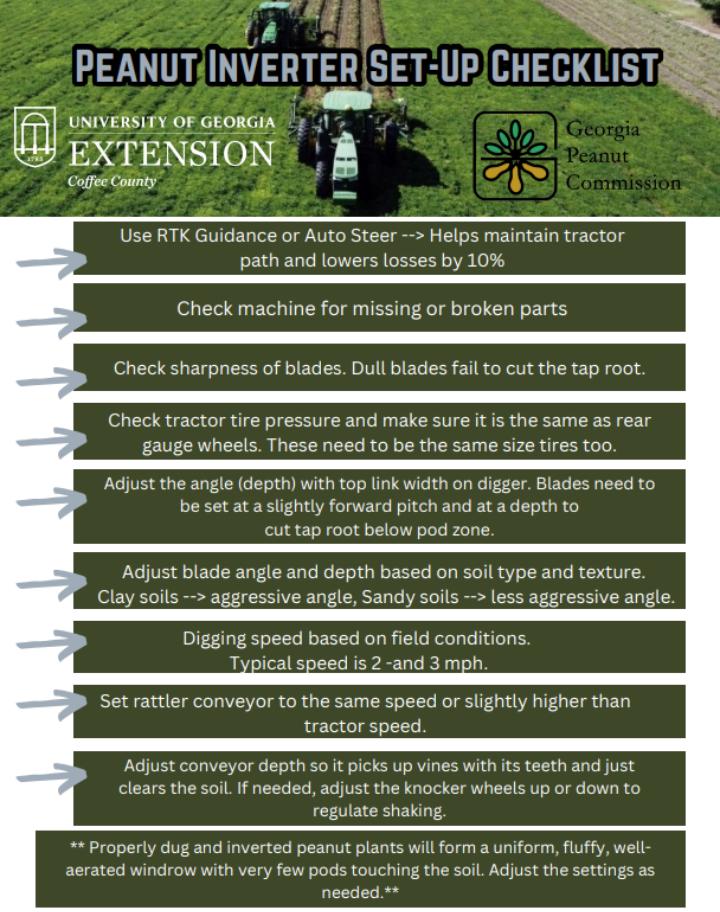
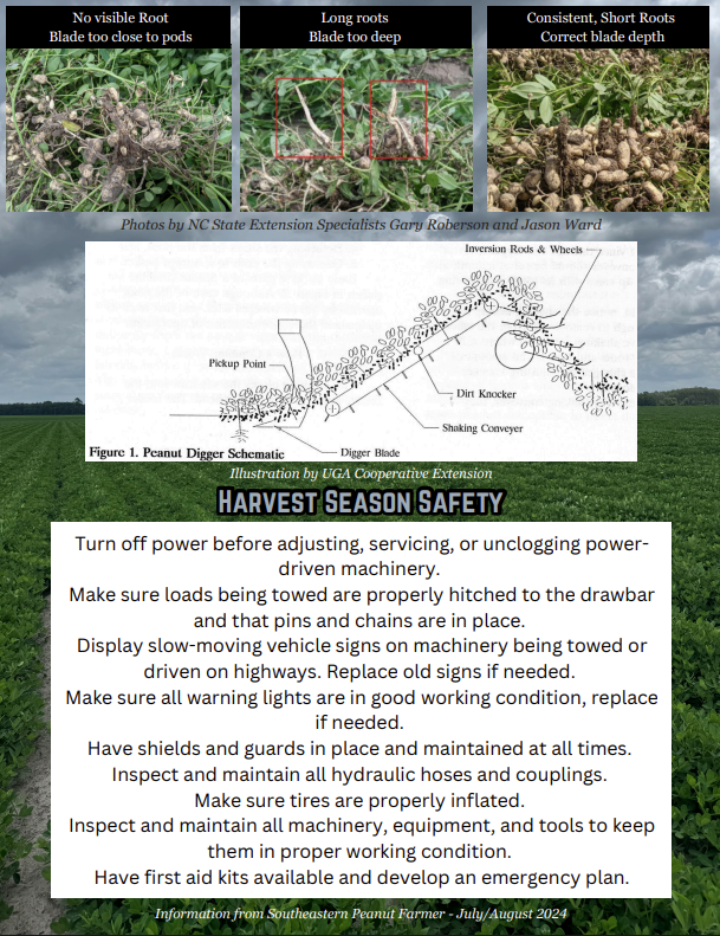
I can say that based on where you wrapped up last year your peanut inverter probably needs a good maintenance prior to putting it in the field this year. Last fall was dry from the beginning of September. The dry conditions really wear on inverters and their wear components. I have worked with Agents and other Specialists to develop a checklist for you to work through to ensure your individual components on this machine is ready. Some issues that I have seen already have been worn blades and coulters, bad bearings, bent guide rods etc. I would encourage you to take time to work through this checklist and if you have specific questions either reach out to your local Agent or dealer.
Another critical thing to monitor once you move to harvest is loss. I have worked to provide a step-by-step guide below on how to document harvest loss. When your conditions change drastically, I would strongly encourage you to do a harvest loss check. If the losses are high, please consider working through your combine to ensure you maximize harvest potential.
Peanut Inverter/ Digger Set-Up
Below is a short checklist created by Ashley Smith, UGA Extension Agent in Coffee County, for peanut inverters. From last year, we have a deeper dive into each of these steps on Peanut Inverter/Digger Set-Up | Extension Precision Ag and Irrigation.
Estimating Harvest Losses for Peanut
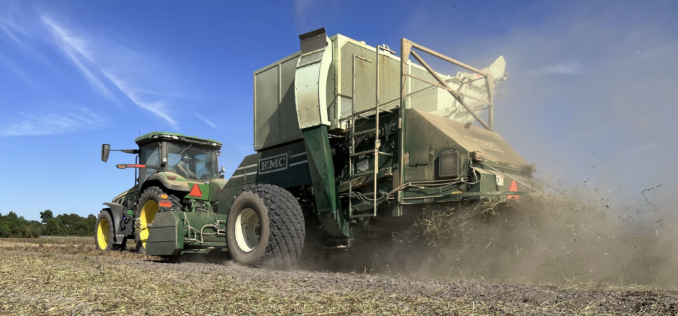
Losses during peanut harvest are common and can be caused by improper setup, operation and/or performance of the harvest equipment. Some losses can also be attributed to the field and crop conditions at harvest. Excessive losses can significantly reduce peanut yields and profits if not managed or reduced during harvest. While harvest losses cannot be not completely eliminated, it is always good to understand the level of losses so appropriate adjustments to harvest equipment settings, operational parameters or harvest decisions can be made to keep these losses to the minimum.
Below is a short and simple way to check harvest losses for peanuts:
1.Measure and mark a sample area behind the combine using a tape measure and some flags or a rectangular device the width of the entire windrow. Note: the larger the area, the more accurate the estimation will be.
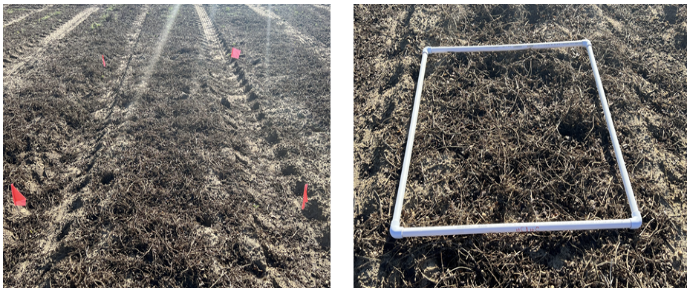
2. Record the length and width of the sample area and calculate the area in square feet. Note: If you are measuring the length of the windrow, you are taking two peanut rows into account with a sample width of 72 inches or 6 feet based on 36-inch row spacing. This may vary slightly and adjust as needed.
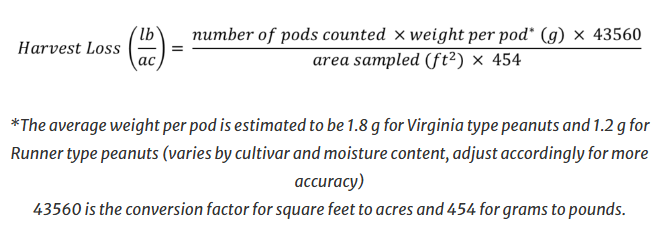
3. Take into account account moisture content in the pods with the formula below.

4. Within the sample area, count the total number of pods and use the formula to estimate the harvest loss in pounds per acre
- Keep in mind that not all pods are mature harvestable peanuts
- Check to count between harvestable pods and pops to adjust accordingly
- For best measurement, at least three to five different areas is ideal
5. For a more precise measurement, you can weigh the total number of pods in grams collected from the sample area and use the formula below. Note: this does not account for pod moisture, which is not easily measured in-field.

Example Harvest Loss Calculation:
If the average number of pods counted in three, 6 ft wide by 6 ft long sections were 15, then using the sampled area as 36 ft2 and assuming Runner peanuts in the formula from step 3, the total harvest losses would be 48 lb/ac.

Other resources for estimating peanut harvest losses:
If you have any questions about peanut inverter set-up or harvest losses on peanut, please reach out to your local UGA County Extension Agent.